



Bob Mackin
The cost of FIFA World Cup security in Vancouver is now in the range of the original, all-in cost for hosting.
In a May 29 budget update, timed by the NDP government for the day after the Legislature session ended, $242 million is the new estimate.
When Vancouver was named one of the 16 co-hosts in 2022, the NDP government said hosting could cost $240 million to $260 million. But FIFA-demanded stadium renovation, the expanded schedule, scope creep and inflation drove-up the total price, now expected to be as high as $729 million.

The April 30 FIFA Congress in Vancouver was a a preview of World Cup security spending. (Mackin)
“Cost estimates will continue to evolve in response to world events and other FIFA factors,” said a presentation to reporters.
The province assumes that the 2023-imposed 2.5% accommodation tax, only in City of Vancouver, will collect $250 million to $260 million by its expiry in early 2030. That revenue stream was originally supposed to cover the entire cost of hosting. In 2023, FIFA expanded the tournament from 80 to 104 matches and B.C. Place Stadium was given two more matches than expected.
The province says it has collected $105.7 million on behalf of Vancouver as of the end of March.
In the June 2025 estimates, the total cost was expected to be as high as $624 million and City of Vancouver and the Park Board’s estimated revenue contribution was $50 million to $62 million.
The new version lowers the expectation, to between $43 million and $53 million.
Asked about the 14% decrease, David Harrison of the city’s host committee office said that is because of a “a projected decrease in sponsorship program revenue. This revenue decrease is partially offset by an anticipated increase in FIFA Fan Festival Vancouver revenue.”
With three weeks to go, the city announced nine host city supporters under the sponsorship program. One of those supporters, the PNE, told theBreaker that it paid nothing to be part of the program and is not buying any match tickets from the city’s $14.4 million inventory.
The 2025 update’s section on risks identified the potential for “less-than-planned net revenue from the host city commercial program due to lower market demand.”
The report said the Fan Festival’s net cost is $26 million. But Harrison later said the gross cost is $47.6 million and funding is provided “through a collaborative partnership involving multiple contributing organizations.”
He did not provide the breakdown, but all signs point to the province taking a bigger role at an event that was supposed to be solely city-delivered.
He said revenue is projected at $21.6 million from food, beverage and ticket sales.
Is the true cost closer to $1 billion?
Adding the PNE Amphitheatre to the running tally would bring World Cup costs to as much as $912 million.
The $183 million centrepiece of the Fan Festival must be completed on a timeline to fulfil that duty beginning June 11. While gate admission is free to the Fan Festival, the reserved seating under the big roof is not.
In 2006, when B.C.’s Office of the Auditor General analyzed costs to build and operate the Vancouver 2010 Winter Olympics, it cited the Government of New South Wales’ definition for the costs of the Sydney 2000 Summer Olympics: “costs directly related to, or incurred in meeting, the obligations of the host city contract.”
“The investment into the amphitheatre by the city of Vancouver and the need for that is going to have a legacy well beyond the games,” Kahlon said. “I wouldn’t say that it was built for the World Cup, but it’s been built for bringing more tourists and more economic opportunities to the PNE grounds. It’s going to have a legacy for years into the future.”
The World Cup happens at a time when the province has a record deficit and the NDP government has cancelled expansion at Burnaby Hospital and several projects for seniors housing. Yet, Kahlon and Kang continued to repeat the vague five-year forecast of $1 billion more revenue and 1 million more tourists due to the World Cup.
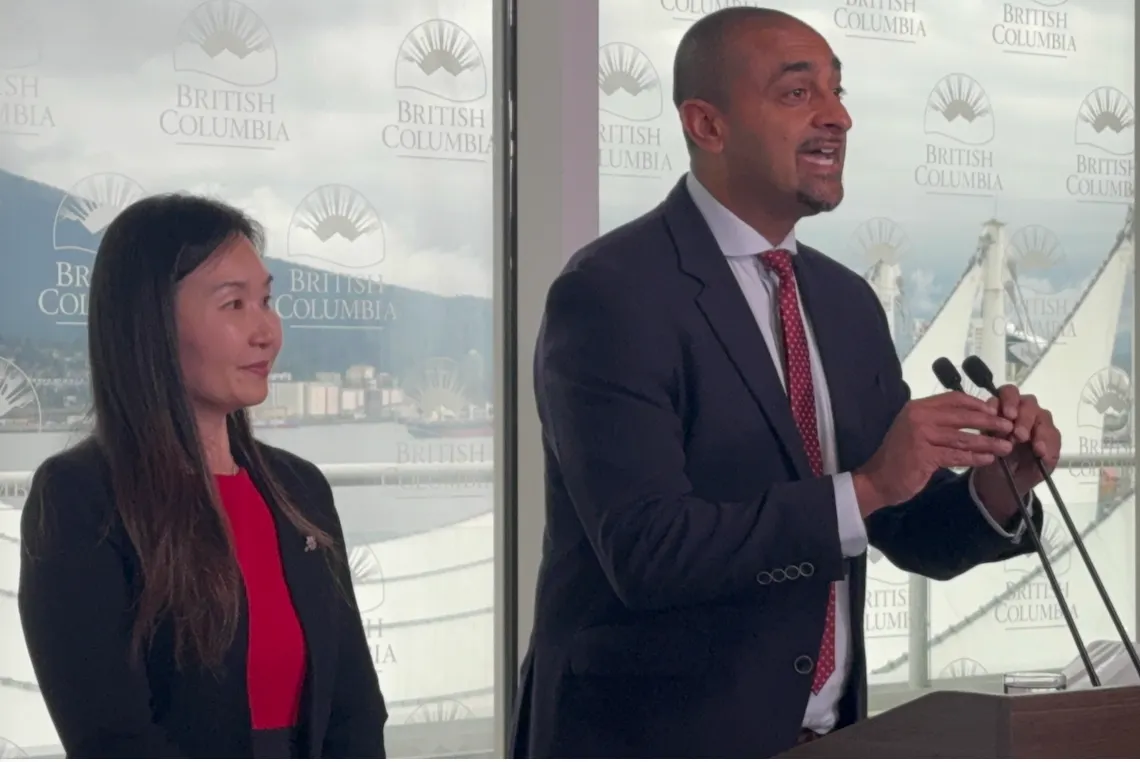
“We need to continue to find opportunities to grow the economy, so that we can provide long-term care opportunities, expand our health care, expand the opportunities for education for young people,” said Jobs Minister Ravi Kahlon. “We need to do both, and that’s what this initiative is about.”
NDP ducking accountability, transparency
Carson Binda, B.C. director of the Canadian Taxpayers Federation, said costs have skyrocketed 217%.
He also said the NDP government is dodging accountability with World Cup spending and making it harder for British Columbia journalists, taxpayers and advocates to get documents. The government’s amendments to water down the freedom of information law were passed on the final day of the Legislature session.
“Releasing these newest cost figures just a day after the legislative session closes is a naked attempt to avoid accountability,” Binda said. “David Eby didn’t want to be questioned about these dramatic cost overruns in question period.”
The province gave reporters a 19-page Powerpoint presentation and a seven-page summary, but those were not sufficient, Binda said.
“We need to see what the business plan is, what the line-by-line spending is, how our money is being used at the end of the day,” he said. “There’s no reason for the government to be withholding those kinds of documents, if they exist at all.”
Subscribe to theBreaker.news on Substack. Find out how: Click here.